





Your Gut Is Running More Than Your Digestion: 5 Parts of Your Body It Influences
Ask most people what the gut does and they'll tell you it digests dinner. That's true, but it's only a small part of the story. Tucked inside your digestive tract is a vast community of bacteria, fungi and other microbes,1 collectively known as the gut microbiome. Far from simply helping to digest food, these tiny organisms are increasingly recognised as important players in many aspects of human health.
These discoveries help explain why gut health has been a cornerstone of nutritional therapy for decades, long before the gut microbiome became a topic of everyday conversation. They also help explain why seemingly unrelated symptoms, from low mood and skin flare-ups to persistent tiredness, may sometimes have links to what's happening in the gut.
 What is the Gut Microbiome?
When people hear the word bacteria, they often think of infections or illness. In reality, most of the microbes that live in and on our bodies are either harmless or beneficial. They form communities on our skin, in our mouths and, most abundantly, throughout our digestive tract.
Together, these bacteria, along with fungi and other microorganisms, make up what's known as the gut microbiome. Far from simply living alongside us, they protect us in a number of ways. Microbes help break down components of our diet that we couldn't digest on our own, produce beneficial compounds such as short-chain fatty acids and interact with our immune, nervous and metabolic systems.
No two microbiomes are exactly alike. The balance of microbes we each carry is shaped by factors such as birth, diet, age, lifestyle, medications and our environment. Although every person's microbiome is unique, one thing is becoming increasingly clear: the health of these tiny organisms can have surprisingly wide-reaching effects throughout the body. Here are five parts of your body that your gut has more influence over than you might expect.
1. Your Brain and Mood
Your gut and your brain are in near-constant contact. This two-way link, known as the gut-brain axis, runs partly through the vagus nerve, a direct nerve pathway connecting your digestive system to your brainstem, and partly through the chemical messengers your gut bacteria help produce.
One of the more striking examples is serotonin. Most people associate this neurotransmitter with mood regulation in the brain, but around 90 per cent of the body's serotonin is actually made in the gut, largely by specialised cells lining the intestinal wall called enterochromaffin cells.2 Gut bacteria play a role in this process, influencing serotonin production and signalling within the gut, which may have wider effects through gut-brain communication.
This close wiring is why emotions often show up as physical sensations in the gut before you've consciously registered them. The fluttering of butterflies before a big presentation, or a stomach that ties itself in knots during a stressful week, is the enteric nervous system, sometimes called the body's second brain thanks to its dense network of neurons and neurotransmitters, responding to signals from the brain and sending its own straight back.
Researchers are still working out exactly how gut bacteria shape this system, but the communication network behind that gut feeling is very real.
2. Your Immune System
It's no coincidence that scientists studying immunity pay so much attention to the gut. A large proportion of the body’s immune cells are found in and around the digestive tract,3 largely within a specialised layer of tissue known as gut-associated lymphoid tissue (GALT).
This close relationship between the gut and the immune system is one of the best-established areas of microbiome research and it makes sense when you think about it. Your gut lining is one of the main places where the outside world, in the form of food, bacteria and other particles, meets the inside of your body. Your immune system needs to work out, meal by meal, what's a harmless piece of broccoli and what's a genuine threat.
A diverse and balanced population of gut bacteria helps train and regulate this immune response, partly through short-chain fatty acids that bacteria produce when they ferment fibre. These compounds are thought to help maintain the integrity of the gut lining while supporting the normal functioning of the immune system, helping it respond when needed without reacting unnecessarily.
3. Your Skin
The idea that gut health can influence your skin isn't simply a wellness trend; there's a growing body of research exploring what scientists call the gut-skin axis. Studies have found associations between the composition and diversity of the gut microbiome and inflammatory skin conditions, including acne, eczema, psoriasis and rosacea.4
Several mechanisms have been proposed. Gut microbes help regulate immune function and influence inflammatory signalling throughout the body, both of which may affect processes involved in skin health. Researchers have also suggested that changes in gut barrier integrity, sometimes referred to as increased intestinal permeability or a compromised gut barrier, may allow bacterial products and other inflammatory compounds to enter the circulation more readily, potentially contributing to systemic inflammation that could influence the skin.
Although this is a promising area of research, skin conditions are influenced by many factors, including genetics, hormones, diet, skincare habits and the environment. While scientists are still unravelling exactly how the gut and skin communicate, the evidence increasingly suggests that the health of the digestive tract may have effects well beyond the gut itself.4
4. Your Heart
The gut-heart connection might be the least well-known of the five, yet the evidence here is steadily building. When gut bacteria break down certain nutrients found in red meat and egg yolks, they produce a compound called trimethylamine, which the liver converts into TMAO, or trimethylamine N-oxide. Higher levels of TMAO in the blood have been associated with an increased risk of cardiovascular problems, including atherosclerosis.1
On the other hand, when gut bacteria ferment dietary fibre from foods like beans, oats, vegetables and fruit, they produce short-chain fatty acids. These compounds are well recognised for supporting gut health and are thought to contribute to healthy blood pressure, cholesterol metabolism and balanced inflammatory responses, all of which are important for cardiovascular health.5
This doesn't mean a single meal will make or break your heart health. Instead, it's your overall eating pattern over weeks, months and years that matters most, because it helps shape the types of bacteria living in your gut.
5. Your Hormones and Metabolism
Your gut bacteria also have a hand in appetite regulation and metabolism. Specialised cells lining the gut can release hormones such as GLP-1 and peptide YY in response to short-chain fatty acids produced when gut bacteria ferment dietary fibre.6 These hormones help send signals to the brain that contribute to feelings of fullness, helping to regulate appetite and satiety.
This is one of the reasons nutrition experts place so much emphasis on eating enough fibre. It isn't only about bulk in the diet. Fibre also feeds beneficial gut bacteria, which produce short-chain fatty acids that help stimulate the release of hormones involved in feelings of fullness after eating.
The gut microbiome's influence on metabolism extends further still, affecting how efficiently the body extracts and stores energy from food and how it manages blood sugar. Researchers are still unravelling exactly how these relationships work, but it's becoming increasingly clear that the gut microbiome is an important contributor to metabolic health.6
|
Supporting your gut, day to day A varied, fibre-rich diet with plenty of different plants, vegetables, wholegrains, pulses and fruit gives your gut bacteria the range of fuel they thrive on. Fermented foods such as live yoghurt, kefir, sauerkraut and kimchi may provide live microorganisms that may support a healthy gut microbiome. Some people find it helpful to add a well-formulated probiotic alongside these habits, particularly after a course of antibiotics or during a period of poor eating. |
 Beyond the Gut
Whatever approach you take, the science is increasingly clear that your gut isn't operating in isolation. It's part of an intricate network linking many of the body's systems, one that affects your mood, immunity, skin, heart, and hormones. Looking after it is one of the ways you can support your long-term health, not because it fixes any single symptom overnight, but because so much else depends on it working well.
 What Makes a Good Live Bacteria Supplement?
If you're taking a food-first approach to gut health, you're already laying the right foundations. A varied, fibre-rich diet is still the single most important factor in supporting a healthy microbiome. For those looking for additional support, however, the quality of a live culture supplement matters just as much as the number of bacteria it contains.
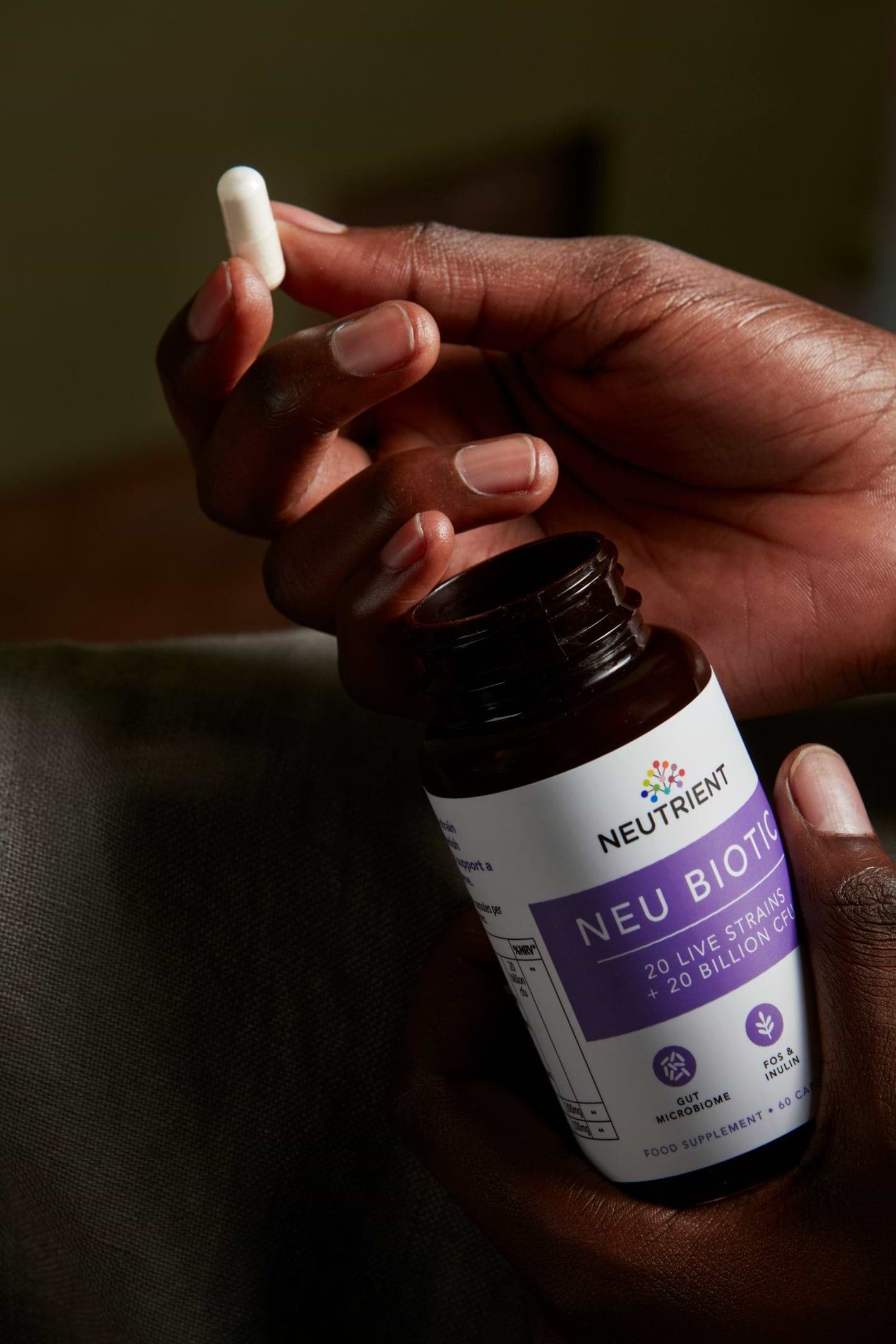
NeuBiotic has been formulated as a synbiotic, combining 20 carefully selected strains of live bacteria with organic prebiotic fibres that provide a food source for both the supplemented bacteria and your existing gut microbes. The formula also uses an enteric-coated capsule to protect the bacteria as they pass through the stomach, helping more of them reach the intestine intact, where they're intended to work.
While the ideal combination of live bacterial strains continues to be researched, some evidence suggests that multi-strain formulations may offer broader benefits than single-strain products, although it's not yet clear whether this is due to the combination of strains themselves or other factors, such as dose.7
Like any supplement, NeuBiotic is designed to complement a healthy diet, not replace it. If you'd like to explore the full formulation, including the individual strains and ingredients, you'll find more information on the NeuBiotic product page.
Written by: Jacqueline Newson BSc (Hons) Nutritional Therapy
References
- Su X, et al. The gut microbial metabolite trimethylamine N-oxide and cardiovascular diseases. Frontiers in Endocrinology. 2023.
- Akram N, et al. Exploring the serotonin-probiotics-gut health axis: A review of current evidence and potential mechanisms. Food Science & Nutrition. 2024.
- Wiertsema SP, van Bergenhenegouwen J, Garssen J, Knippels LMJ. The Interplay between the Gut Microbiome and the Immune System in the Context of Infectious Diseases throughout Life and the Role of Nutrition in Optimizing Treatment Strategies. Nutrients. 2021;13(3):886.
- Munteanu C, Turti S, Marza SM. Unraveling the Gut–Skin Axis: The Role of Microbiota in Skin Health and Disease. Cosmetics. 2025;12(4):167.
- Mylavarapu M, et al. The gut-heart axis: A comprehensive review of microbiota's role in cardiovascular health and disease and emerging therapeutic strategies. Reviews in Cardiovascular Medicine. 2025.
- Martin AM, Sun EW, Rogers GB, Keating DJ. The Influence of the Gut Microbiome on Host Metabolism Through the Regulation of Gut Hormone Release. Frontiers in Physiology. 2019;10:428.
- Chapman CM, Gibson GR, Rowland I. Health benefits of probiotics: are mixtures more effective than single strains? European Journal of Nutrition. 2011;50(1):1-17.
Leggi di più
When people think about nutrient pairings, calcium and vitamin D are usually the first that spring to mind. But there's another combination worth considering: vitamin C and magnesium. Vitamin C is ...

You only have to look at your skin after a week of broken sleep, missed meals and back-to-back stress, and you can see that something's out of balance. And you wouldn’t be wrong. Scientists now rec...